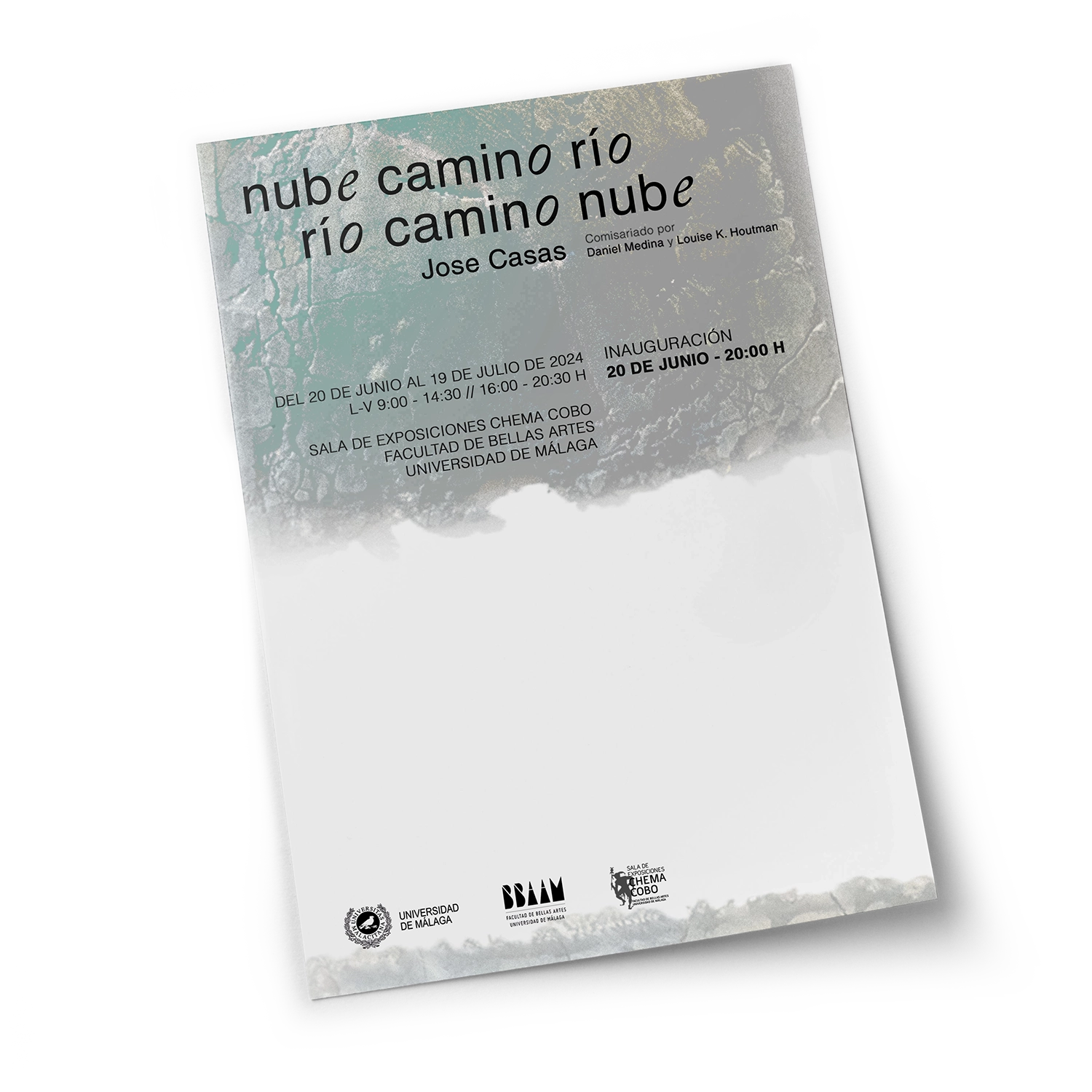
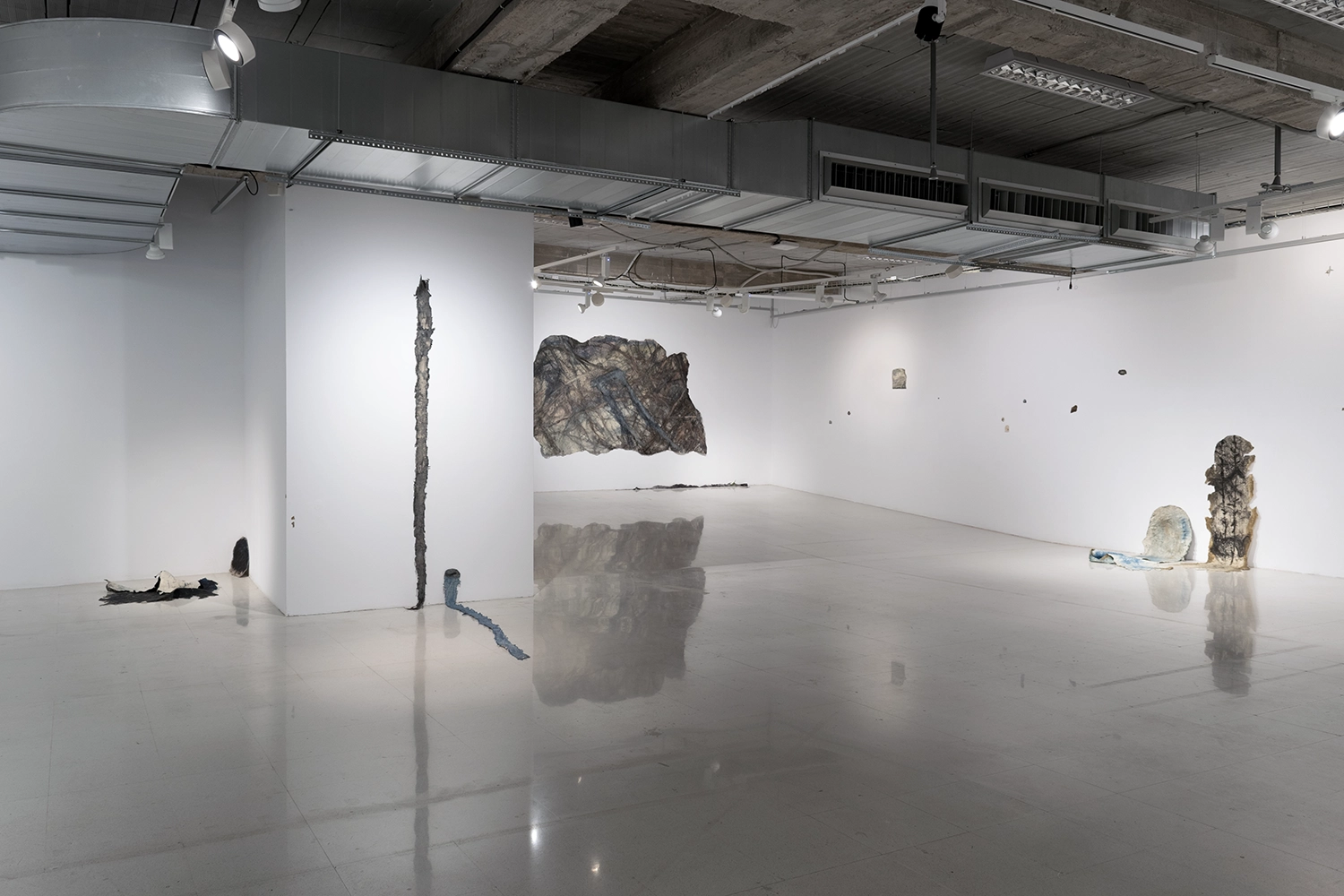
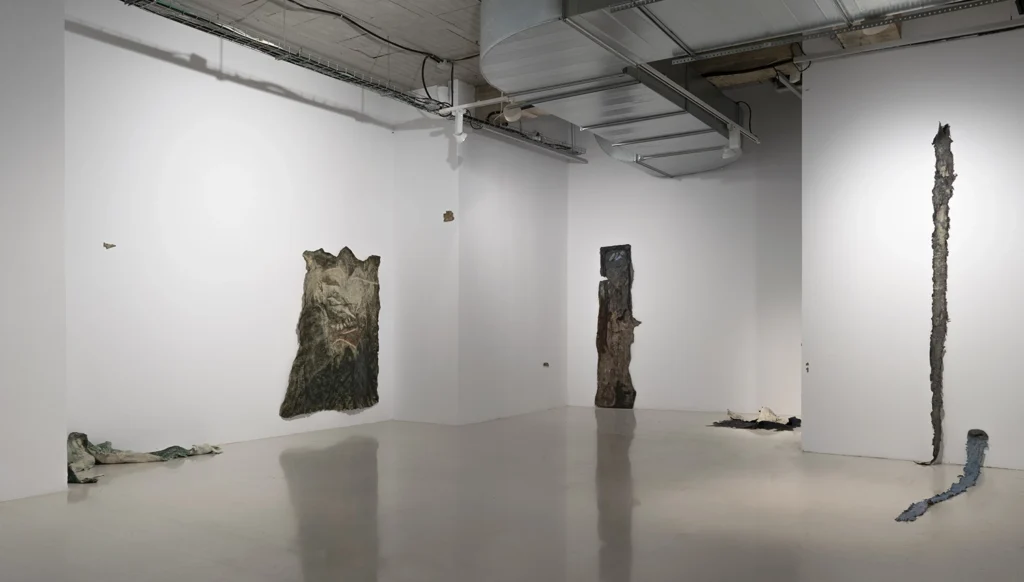
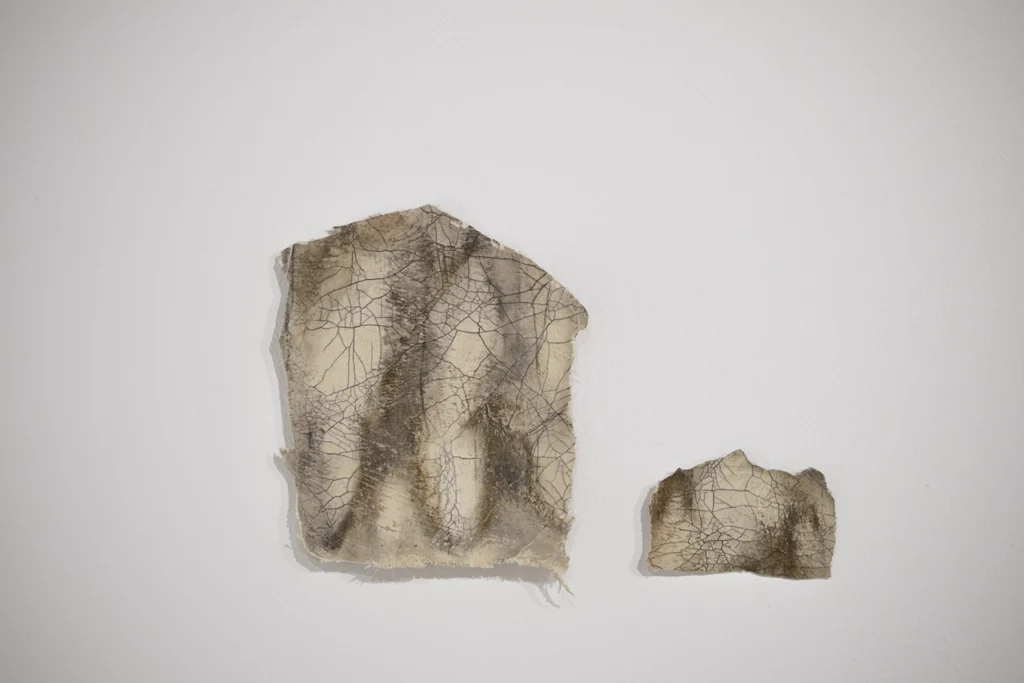
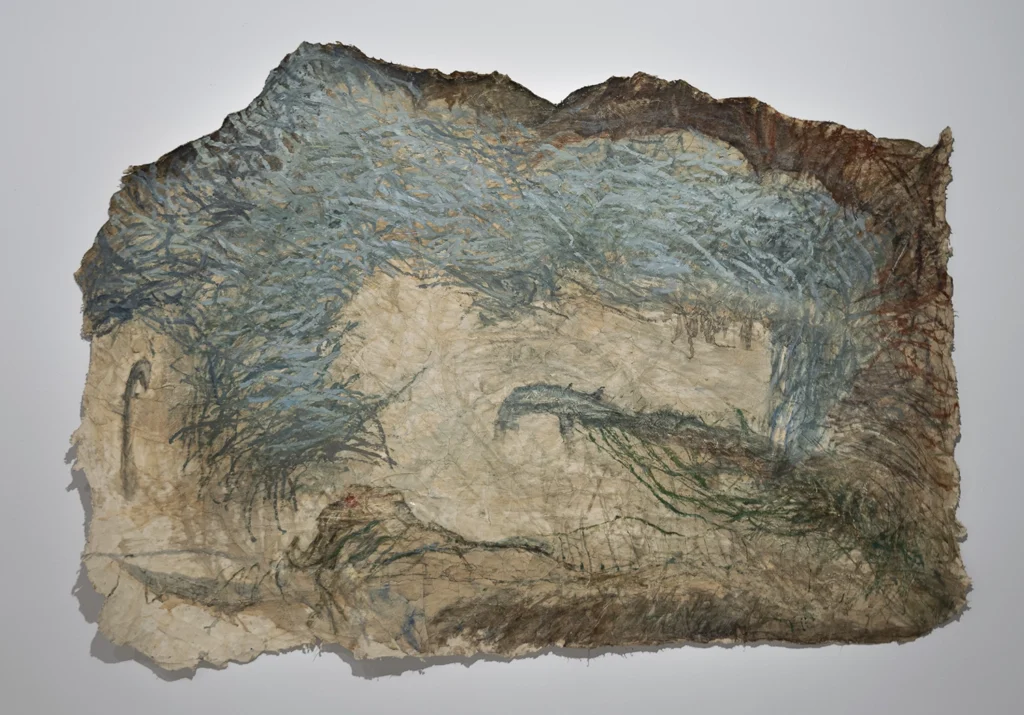
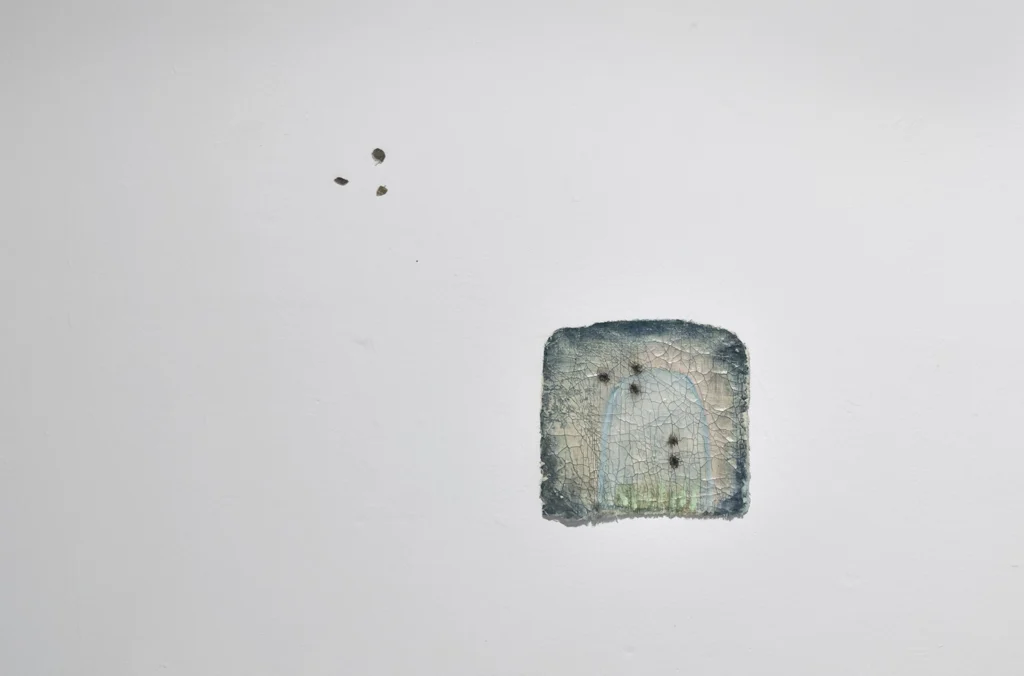
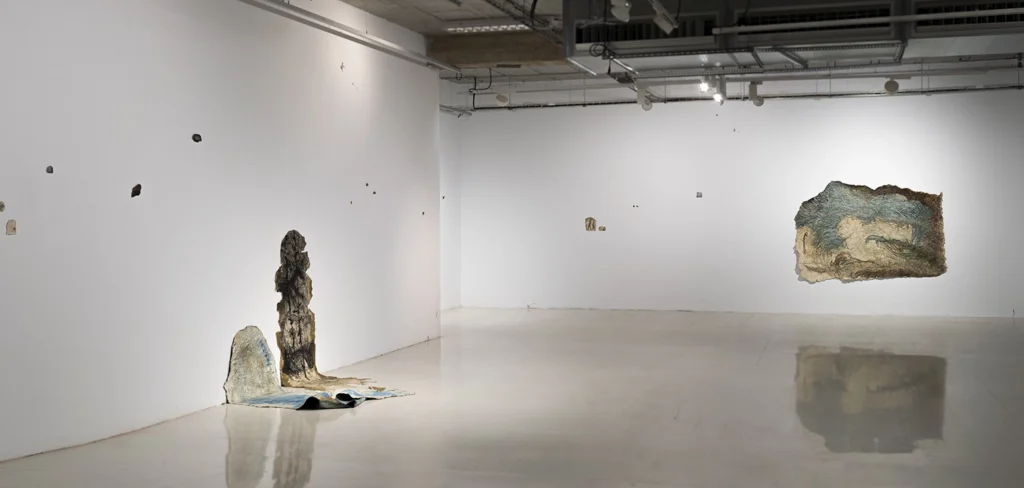
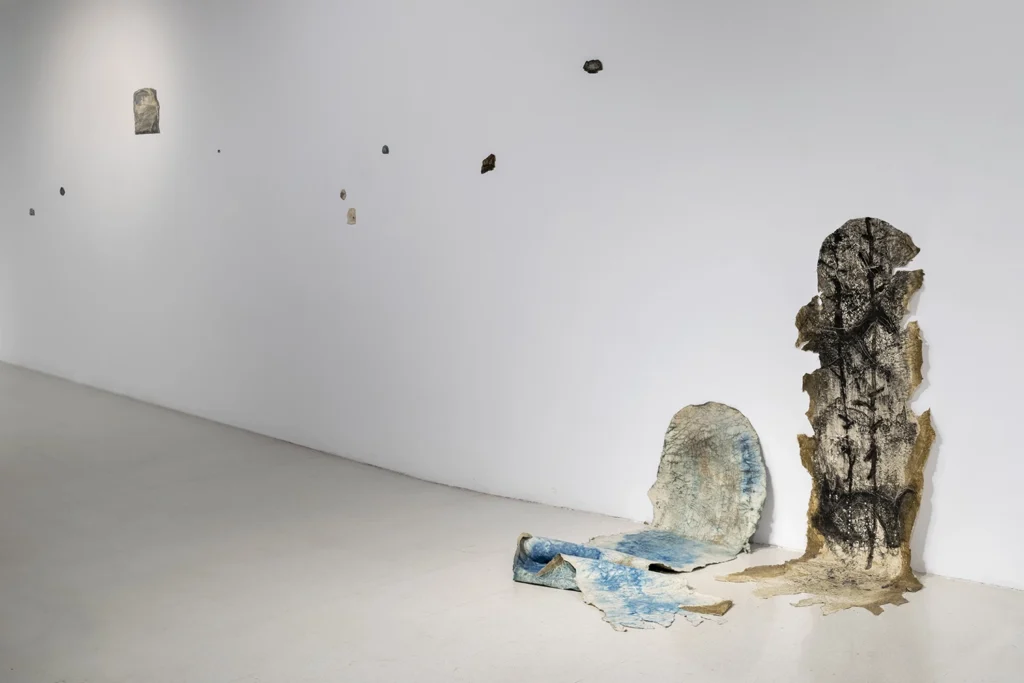
Like a fable, nube camino río / río camino nube [cloud path river / river path cloud]offers us mediating images of constraining symbols that are hurled at us with both speed and weight. Images fiercely delicate, pending on a rough yet subtle perception.
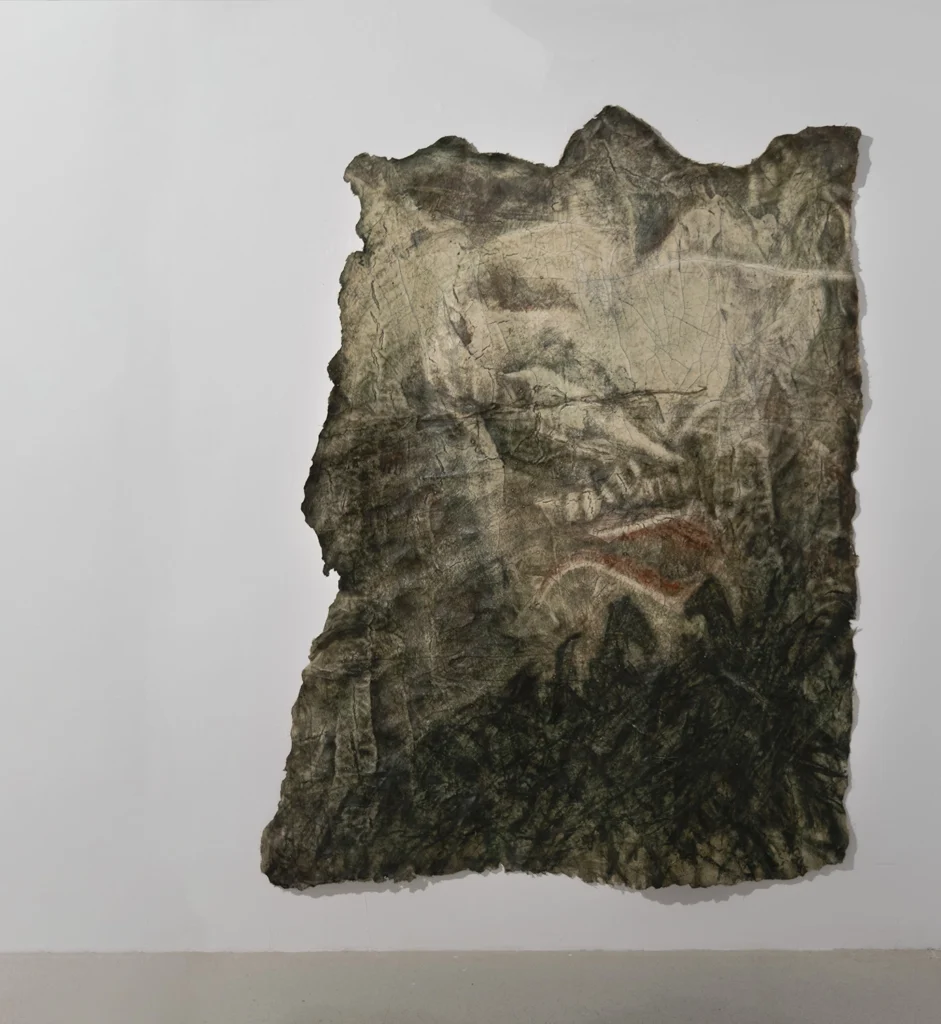
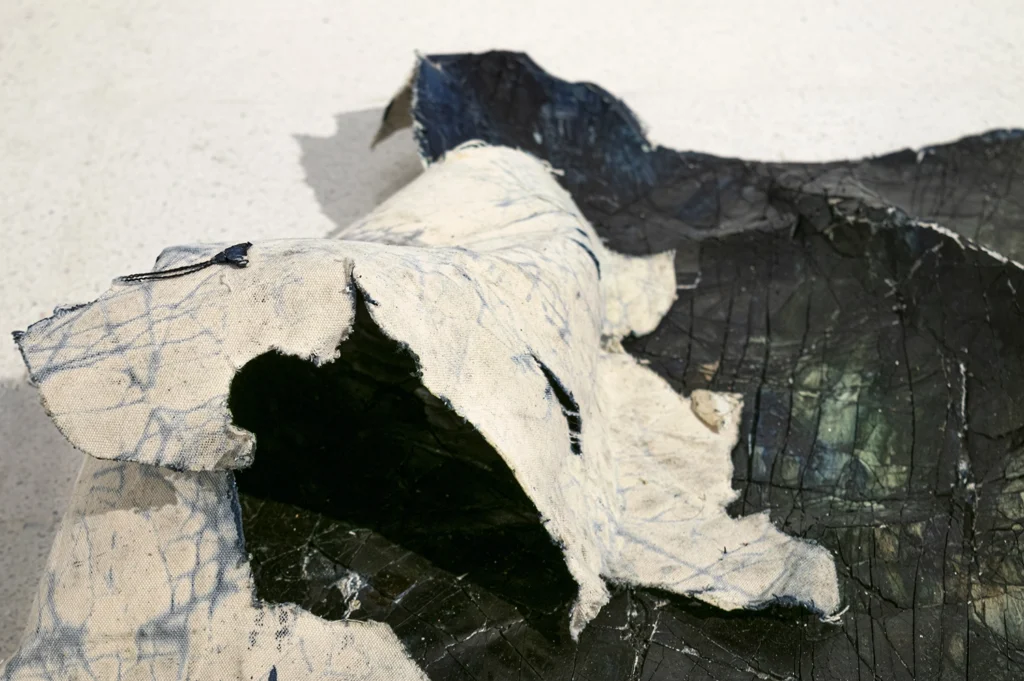
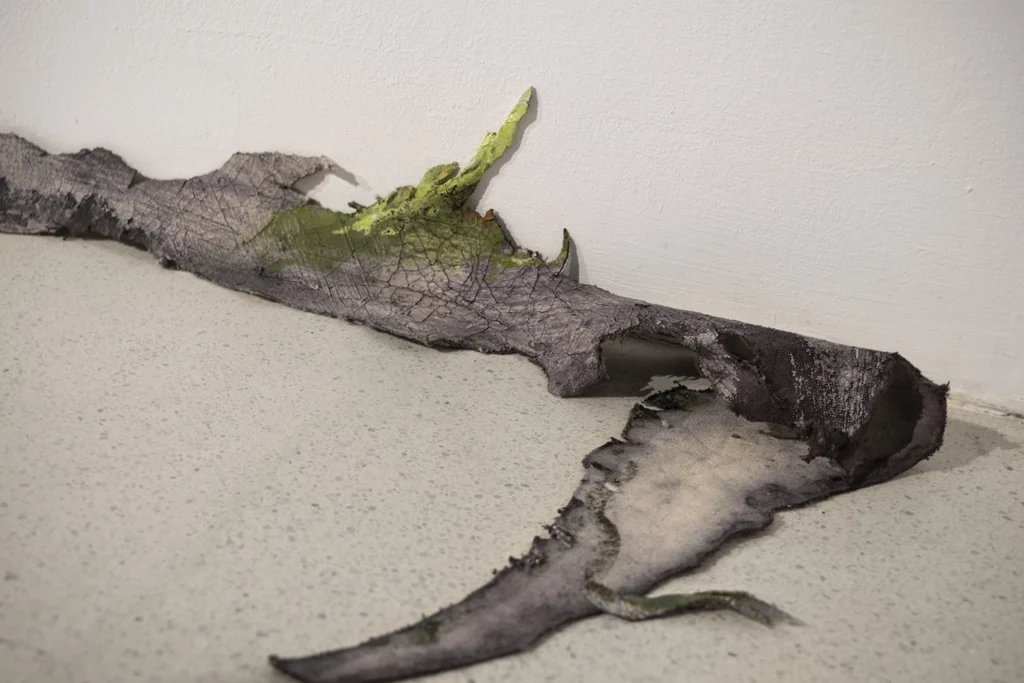
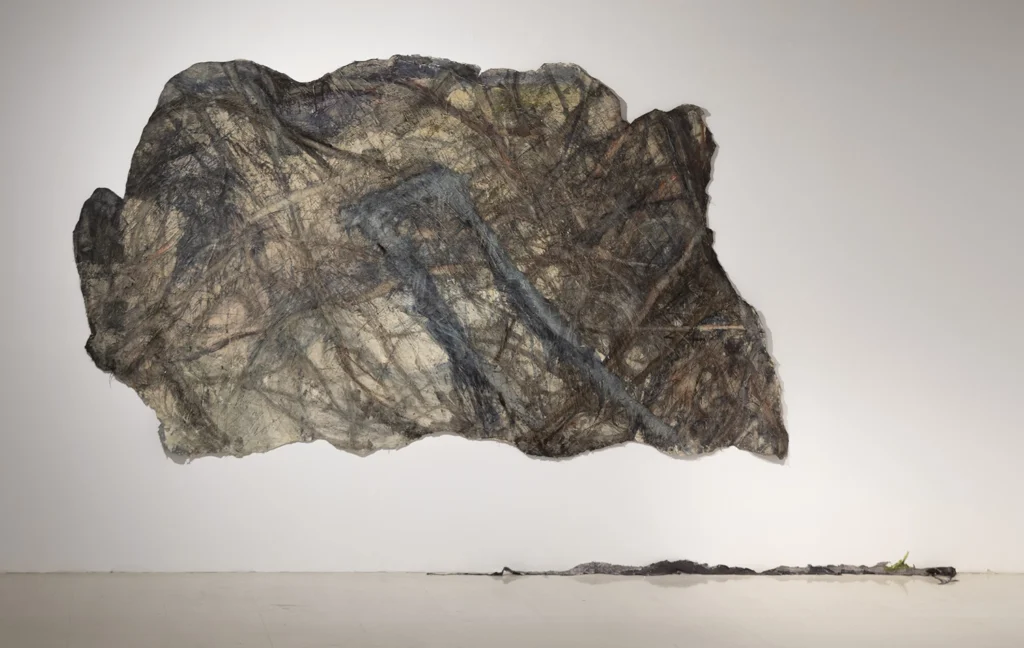
The works of Jose Casas denote living presences sunk into inner depths, into which we peer to discover open fields. Through his paintings that mediate installation, we are presented with a dialogue with fracture, in a constant making and unmaking: join, separate, break, sand, paint, sand, paint, sand, paint… With sustained attention to the works, the marks themselves reveal the process of their own creation, characterized by an exploration of form and materiality. In them we find a perceptual impression of long exhaustion, through fracture, cracks, accident, in accumulative and suppressive gestures. Thus, these limits between loss and discovery, accident and re-signification, collapse and support, point to an indescribable sensation that escapes words yet is invoked in the presence of his pieces. The use of different formats entails a strong spatial linkage. They give rise to significant considerations between the represented, the space of representation, and the place they occupy among themselves—arriving then at the quality of place, of habitat, and therefore, of presence.
These images, worked to the point of wear, weave a bridge with the images of memory itself: distance, blur, fragmentation, familiarity, strangeness… We approach a world of suspended, deteriorated, fragile images, yet with luster and robustness. In these creations exists the condition of survival at the margins of the path. Grotto of exile, dream and vision. There emerges a terrible pathos containing elements of sacrifice, where—strangely because of this—it acquires, in turn, a tender gaze. These deteriorations imply the arising and subsequent appearance of an image that the artist follows “without really knowing where to, but towards something they point at. They are placed in a world of difficult access, yet one already finds oneself immersed within it.”
Jose’s work is strongly magnetized to themes of childhood, death, and the animal. Children’s drawing, Art Brut, cave painting, Egyptian hieroglyphs, Aztec funerary statuary, medieval codices, Renaissance emblems, or early 2000s animation series tied to his childhood—all form part of a varied imaginary he takes as reference. Equally so, the attentive observation of everyday elements in forms of expansion and convergence, since the perceptive influence that triggers the activation of imaginative qualities plays a fundamental role in the elaboration of his works. Such are the apophenic phenomena arising from elemental surfaces: cracks and cavities, doors of ruined houses, clouds or patches of light…
Cloud, fountain, cypress, thorn, tomb, lake, are some of the titles that, according to the artist, “seek to grasp the air that surrounds them, and to pronounce themselves as an unavoidable bond with the tense void that the image lends to the word.”
Jose Casas seems to value—under the quality of refuge—those imaginative sensibilities in processes of reciprocal displacement and belonging to the world. Crystallized in gestures and signs, in his paintings we can feel this strange coincidence, in his words: “from the frame of tearing, terrible, terrible, terrible, to see the glimmers of mysteries and miracles that in the everyday seem to inhabit everything. And I say everything, I assume what this everything implies. Nothing innocent.”
nube camino río / río camino nube [cloud path river / river path cloud]situates us, then, before images of slow, attentive, conglomerated reading, in contradictory movements. With polar virtues and multiple readings, examining several planes at once, meant to be decomposed, intervened by the hard touch of the paleographer, the soft touch of the epigraphist.
It places us before an emotional threshold capable of sustaining itself and collapsing outside itself, that continues and surrenders at once, that comprehends with intensity a simultaneous death and life.
Text by Teresa Soto Tafalla 🗋